• Tether to Home
This project introduces a material-centered design framework for next-generation orbital habitats, using TESSERAE as a case study. Rather than treating materials as inert finishes, the framework positions them as active building blocks of a synthetic ecology, an “Envirome” as termed by the SEI, where survival and culture converge. Drawing on metaphors from ecology, ethnography, and game design, the analysis highlights how, just as Minecraft defines worlds through blocks and crafting recipes, space architects must define the inventories and interactions of matter in orbit. The framework unfolds in four phases: Inventory (which materials exist), Recipes (how they assemble into panels and environments), Modes (how they behave in Creative/Earth vs. Survival/LEO), and Worlds (how astronauts inhabit the resulting ecology). Additional conceptual tools include the Spectrum of Designer Control, or the range between modular interiors and fully integrated, organism-like habitats, and the geode metaphor, which recasts habitats as terrestrial ecologies turned inside-out. A lifecycle perspective further extends materials beyond single use, envisioning walls that evolve as nutrient sources, microbial scaffolds, filters, and textiles. In this view, survival in orbit depends on shielding, closure, and life support, while thriving requires materials that also sustain biophilia, identity, and culture. Space architecture thus emerges not as the abandonment of nature but as its extension: the deliberate cultivation of new ecologies in vacuum. Feel free to email me if you are interested in reading this paper!
Aerospace Intern, The Aurelia Institute (MIT Media Lab Spinout) / Autodesk
Year
Summer 2025

• Transposing Vessels
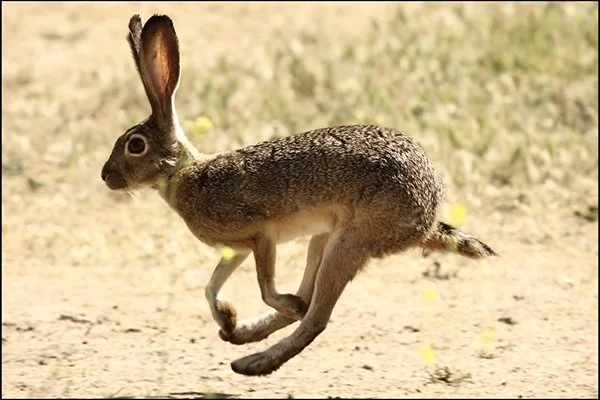
"Transposing Vessels" is a biomimetic wall system inspired by the thermoregulatory mechanisms of Black-Tailed jackrabbit ears. Jackrabbits rely on their large ears to regulate body temperature through vasodilation, where blood vessels expand to release excess heat into the environment. This conceptual prototype mimics these processes to protect building occupants from extreme temperature fluctuations caused by global warming. The design features tubular vessels that facilitate heat exchange through water movement and shifting surface layers that replicate vasodilation mechanisms (mechanical vasodilation).
The wall system uses solar-powered energy to pump fluid through tubes, allowing continuous heat transfer between interior and exterior environments for temperature regulation. Mycelium, a sustainable material known for its insulative and porous properties, is explored as a potential construction material for this prototype, with opportunities for further research into its application in architecture.
Design Hive Program, Cooper Hewitt, Smithsonian Design Museum
Year
Spring 2022
“Platformed Sustainability” envisions a conceptual marketplace where architecture mimics nature’s resilience. Designed along The High Line, this hill-shaped structure rises at the intersection of infrastructure and ecology, adorned with tree-like pop-up shops crafted entirely from recycled plastic.
Visitors, tourists and locals alike, are invited to wander through botanical exhibits that bloom between vertical platforms while supporting local, eco-friendly businesses across an ‘orchard’ of recycled plastics. Here, architecture seeks to shield Mother Nature against the sickening fumes of pollution, fostering a community united by renewal and resilience that reimagines urban spaces as sanctuaries for both people and planet. The modular structure integrates vertical garden systems within recycled HDPE framework while creating dynamic shade patterns for visitors below.
Columbia's Architecture Pre-College Program, the project received Honorable Mention in the Scholastic Art & Writing Awards.
Year
Summer, 2020
• Platformed Sustainability

• CTCF Neighborhood: Art & Science Fusion Project [In Progress]
In the 2020-2021 academic year, I conducted research on the gene transcription proteins CTCF and CTCFL at the Vos Lab at MIT, where I taught myself Python and scripted codes for Pymol, a 3D software essential for protein visualization. Inspired by my research, I began reimagining the CTCF protein as a ‘neighborhood,’ where each amino acid forms the structural foundations of a home. Conserved positions on the protein correspond to identical-looking houses inspired by Levittown-style uniformity, while points of variation reflect architectural modernity, challenging notions of normality through creative differentiation.
In this conceptual neighborhood, molecular structures such as carboxyl and amino groups form the base of each house, while side chains influence unique architectural features like balconies or extensions. This design mirrors how amino acids differentiate in structure while maintaining their essential functions within proteins.
In the summer of 2021, I was selected for the Art & Science Fusion Project under Dr. Mirna Marinic at the University of Chicago. Currently in development as a picture book for science education, this project maps amino acid residues to structural features of “homes” using Rhino and Adobe Creative Cloud - a visual exploration of X-ray crystallography through a metaphorical stroll in an imaginary suburban ‘neighborhood,’ where algorithmic birds soar through clouds. As readers flip through pages filled with illustrations of houses spanning residue regions along CTCF’s ribbon-like framework, they encounter PyMol diagrams and alignment figures that bridge my fascination with chemistry and architectural design.
The attached rendering offers a glimpse into this exploration: a house perched along a winding green ribbon represent amino acids forming homes within a protein’s structural framework. Some of the models have also been 3D printed.

• Searches for Seniors
I have spent 18 of my 20 summers learning from my grandmothers. My paternal grandmother Joan is a yoga-teacher with a majestic kingdom for a studio, where shoes are forbidden and mice prance under the moonlight. When I was 9, sponging my grandmother’s every instruction, I tucked the aerial hammock behind my back and flipped myself upside down, catapulting my toes up to the Milky Way. I am working to master the star inversion pose to this day.
Her art blanketing her New York City apartment, my maternal grandmother Дема is an oil painter. As I tracked her every movement, she delicately laced Midnight-purple ribbon through my hair, weaving it into a French braid that I am still trying to perfect today.
During the onset of the COVID-19 pandemic in April 2020, I founded "Searches for Seniors" (SFS), a biweekly newsletter designed to help older adults nationwide stay informed, entertained, and connected during a time of isolation. Inspired by my grandmothers, I sought to create a resource that would bridge intergenerational bonds while empowering older adults.
SFS provided curated content such as virtual museum tours, live music performances, interactive games, and guides on navigating smart technology for mental health advocacy. I designed a website to host the newsletter and wrote conversational articles tailored to educate and entertain older adults. Partnering with organizations like JASA and Shepherd’s Centers of America, SFS reached over 42,000 recipients across the U.S., fostering connections through shared stories about blueberry harvesting seasons, the deer that munch on New Jersey’s hydrangeas, and even architectural musings.
When I am with my grandparents, my mind boggles: historical reflections of democracy in the USSR; the history of the Mesopotamian horse; the essential skills of an animal whisperer. As Director, Writer, and Editor of SFS, I sought to dismantle the complexities of smart devices while translating my fascination with education into meaningful entertainment through the intergenerational bonds that cement me.